The Woman Builder Vector Pack: A Practical Asset for Modern Visual Branding
In the crowded landscape of digital content, establishing a distinctive and professional visual identity is a non-negotiable part of any project's execution. For professionals ranging from startup founders to freelance designers, the challenge often lies in sourcing high-quality, adaptable artwork that communicates a specific message without requiring extensive custom illustration budgets. This is where a specialized asset collection, like the Woman Builder Vector Pack 01, becomes a critical tool in the workflow.
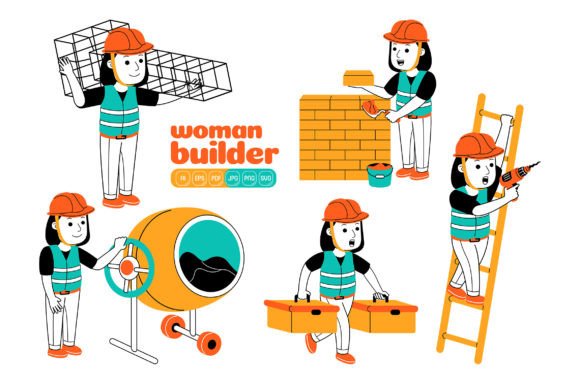
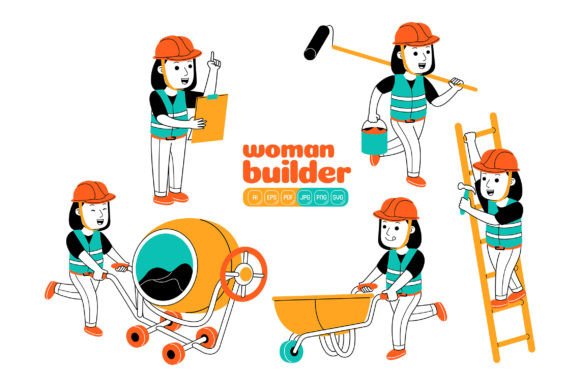
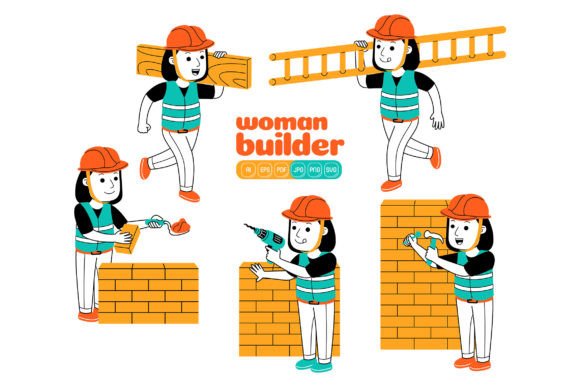
This pack is not merely a set of images; it is a structured library of 100 high-resolution, flat-design vector illustrations centered on themes of construction, architecture, planning, and skilled labor, depicted through female characters. Its core value lies in its format compatibility and design philosophy. Provided as AI, EPS, PDF, SVG, JPG, and PNG files, it is engineered for seamless integration into standard professional processes, whether you are using Adobe Illustrator for deep customization or needing a transparent PNG for a quick web banner.
Integrating Vector Assets into Your Creative and Branding Process
The practical use of such a vector pack spans the entire lifecycle of a project. In the initial planning and conceptualization phase, these illustrations can serve as foundational visual elements. A marketing team developing a campaign for a new software tool, metaphorically framed as "building a better solution," might immediately incorporate these vectors into early mood boards, pitch deck layouts, and prototype wireframes. This early integration ensures visual consistency from the outset, avoiding the common workflow disruption of later searching for assets that match an established tone.
The pack's versatility means it interacts smoothly with other tools and resources. A social media manager can open an SVG file directly in Canva for a post series, while a web developer can implement the same graphic as an SVG inline for a landing page, ensuring scalability and performance. For infographic creation in tools like Adobe Illustrator or even PowerPoint, the editable AI and EPS files allow designers to deconstruct elements, recoloring the builder’s toolkit or the architectural backdrop to match existing brand color palettes without any loss of quality.
Key Considerations for Efficient Implementation
To leverage such a pack effectively, a degree of preparatory organization is advised. Upon acquisition, a practical first step is to audit the 100 files. Categorize them by scene or object—for instance, grouping all "tool-centric" illustrations, all "site-planning" scenes, and all "completed-structure" images. This simple sorting, done once, saves significant time during the execution phase when a specific need arises. Storing them in a cloud service like Google Drive or a project management platform like Notion, with tagged descriptions, further embeds them into an efficient resource retrieval system.
Quality control and consistency are inherent benefits of using a unified vector pack. Because all illustrations share a cohesive flat-design style, a brand using them across a website rebrand, a series of promotional emails, and a printed brochure maintains a uniform visual language. This eliminates the stylistic dissonance that occurs when piecing together graphics from disparate sources, which is a common quality hurdle in fast-paced projects.
Real-World Applications Across Professional Roles
The application of Woman Builder Vector Pack 01 is context-dependent, fitting into various user workflows with minimal friction. For an entrepreneur launching a female-led tech consultancy, the illustrations provide ready-made artwork for the entire branding suite. They can be customized for the website’s hero section, adapted into iconography for service pages, and repurposed into engaging visuals for LinkedIn content, all while reinforcing the core brand metaphor of construction and solid expertise.
Educators and course creators can use these vectors to visually break down complex processes. An online course on project management might use the sequenced illustrations—showing planning, tool usage, and building phases—to create compelling slide decks and downloadable PDF guides. The PNG files with transparent backgrounds are particularly useful here, allowing easy overlay onto existing educational templates without tedious manual cropping.
For bloggers and publishers focusing on productivity, DIY, or professional development, the pack offers a reservoir of artwork for articles and featured images. A blog post about "building your skillset" can be instantly enhanced with a relevant, professional graphic, elevating the content's perceived value and shareability on social media platforms. This solves the common time drain of creating or sourcing unique images for every publication.
Long-Term Value and Asset Management
Viewing this vector pack as a long-term asset rather than a one-off purchase changes its role in your resource ecosystem. As a business grows and its branding evolves, the editable nature of the vector files means the artwork can evolve alongside it. A color scheme change across all branding materials, for instance, can be propagated efficiently by editing the master AI files and re-exporting the necessary formats, protecting the initial investment in the graphics.
Usability is paramount. The inclusion of multiple file types addresses different skill levels and software access. A hobbyist or small business owner with basic design software can use the high-resolution JPG or PNG files effectively. Meanwhile, a professional designer with full access to Adobe Illustrator can exploit the full potential of the layered AI files, extracting individual elements to create entirely new composite scenes for specialized campaigns.
Streamlining Workflows from Concept to Delivery
The ultimate test of any digital asset is how smoothly it integrates into the path from concept to final delivery. This vector pack functions as a bridge. During the active execution phase of a website build, a designer can pull SVG files directly into the development environment for crisp, scalable graphics. When preparing promotional materials for a product launch, the marketer can quickly customize a vector scene to include product mockups within the builder’s hands, creating a metaphorical and visually cohesive advertisement.
This process-oriented utility reduces dependency on multiple freelancers or stock photo subscriptions for niche themes. It provides a consistent, owned library that can be deployed across teams. A content team, a design team, and a marketing team can all work from the same set of core visuals, ensuring that the output from every department—from an Instagram story to a white paper—feels part of a unified whole. This coordination is often a significant hurdle in larger projects and is directly addressed by having a central, adaptable visual resource.
In practice, the workflow integration might look like this: a project manager initiates a new campaign with a key metaphor of "building client success." The design lead immediately accesses the categorized vector pack, selects five foundational illustrations, and places them in the shared project folder. The content writer uses those visuals to outline blog topics, the social media specialist crops and filters them for platform-specific posts, and the web developer integrates them into the coded layout. All this stems from a single, organized asset purchase, demonstrating how a well-structured vector pack can sit at the center of a multidisciplinary workflow.
By focusing on practical implementation, format readiness, and long-term adaptability, Woman Builder Vector Pack 01 moves beyond being a simple collection of graphics. It becomes a strategic component in a professional’s toolkit, one that supports efficiency, maintains quality, and enhances visual storytelling across the myriad tasks that define modern creative and business work. Its value is realized not just in the individual illustrations, but in how seamlessly they become part of the process—from the initial planning document to the final published banner.